
Ring Size Guide: How to Find Your Perfect Fit
Comfort is part of the design
A well-fitting ring should feel secure, comfortable, and wearable through normal changes in temperature, activity, and time of day.
In this guide
Ring size is one of the most important details in choosing an engagement ring, wedding band, stacking ring, or everyday jewelry piece. A ring that is too loose can spin or slip off. A ring that is too tight can feel uncomfortable and may be difficult to remove.
This guide explains how to measure your ring size, what affects fit, and how to choose a size that works for your real life.
Quick Answer: How Do You Find Your Ring Size?
The most accurate way to find your ring size is to be measured by a jeweler or use a proper ring sizer. Measure when your hands are at a normal temperature, avoid measuring when your fingers are swollen or cold, and consider the ring style before choosing a final size.
What a Good Ring Fit Should Feel Like
A ring should slide over the knuckle with a little resistance and sit comfortably at the base of the finger. It should not fall off easily, but it also should not feel tight, painful, or difficult to remove.
A small amount of movement is normal, especially if your knuckle is larger than the base of your finger.
Why Ring Size Changes
Your finger size can change throughout the day and from season to season.
- Heat can make fingers swell.
- Cold can make fingers shrink.
- Salt, hydration, hormones, and activity can affect fit.
- Hands may swell more in the evening.
- Wide bands often fit tighter than thin bands.
Jewel Eternal Tip: Do not measure only once. Check your size at different times of day before choosing the final size for an important ring.
Best Ways to Measure Ring Size
Use a Ring Sizer
A physical ring sizer is one of the easiest ways to measure at home. It is especially helpful if you are ordering online and want more confidence before choosing a size.
Visit a Local Jeweler
A jeweler can measure your finger and help you understand how different band widths may affect fit. This is often the most reliable option for engagement rings and wedding bands.
Measure an Existing Ring
If you already own a ring that fits the correct finger, you can use it as a reference. Make sure it fits the same finger and same hand, because fingers can vary from hand to hand.
Avoid Paper and String Measurements When Possible
Paper and string can stretch, twist, or sit unevenly, which may lead to inaccurate sizing. They can be useful as a rough starting point, but they should not be the only measurement for a custom or important ring.
Thin Bands vs Wide Bands
Band width affects how a ring fits.
A thin engagement ring band usually feels slightly looser than a wide band in the same size. Wider rings cover more surface area on the finger, so they often need a slightly larger size for comfort.
If you are choosing a wide band, cigar band, thick stacking ring, or multiple rings worn together, sizing may need to be adjusted.
Stacking Rings and Ring Sets
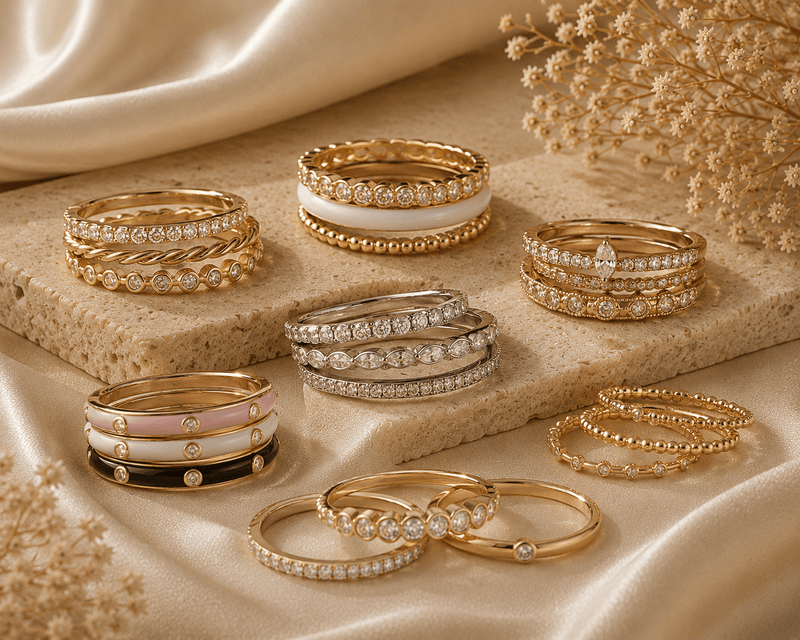
Stacked rings can feel tighter than one ring worn alone. If you plan to wear multiple bands on the same finger, consider the combined width of the stack.
For a stacking set, it may be more comfortable to size slightly differently than you would for one thin ring.
Engagement Rings and Wedding Bands
If you plan to wear an engagement ring and wedding band together, consider how they will feel as a pair.
A straight wedding band, curved band, pavé band, or eternity band may change the way the full set fits. The more rings worn together, the more important comfort becomes.
Finding a Surprise Ring Size
If the ring is a surprise, use an existing ring from the correct finger if possible. You can also ask someone close to the recipient, but confirm carefully because even a half-size difference can matter.
If you are not sure, choosing a design that can be resized may be safer than choosing a difficult-to-resize style.
Styles That Can Be Harder to Resize
Some rings are easier to resize than others.
- Plain bands are usually easier to resize.
- Solitaire rings are often easier to adjust than complex designs.
- Eternity bands can be difficult or impossible to resize depending on construction.
- Detailed pavé bands may have resizing limitations.
- Custom designs should be sized carefully before production.
Common Ring Sizing Mistakes
- Measuring when fingers are cold.
- Measuring only once.
- Using string as the only measurement.
- Assuming both hands are the same size.
- Ignoring band width.
- Choosing a size based only on a ring worn on a different finger.
Frequently Asked Questions
Should a ring feel tight over the knuckle?
A ring should usually require slight pressure to pass over the knuckle, but it should not hurt or become stuck.
Is it better for a ring to be tight or loose?
A ring should be secure without being uncomfortable. Too loose can risk loss, while too tight can be painful and difficult to remove.
Do fingers change size during the day?
Yes. Temperature, activity, hydration, salt intake, and time of day can all affect finger size.
Should I size up for a wide band?
Often, yes. Wide bands can feel tighter than thin bands, so some buyers prefer a slightly larger size.
Can engagement rings be resized?
Many engagement rings can be resized, but it depends on the design, metal, stone placement, and band style. Eternity bands and detailed pavé designs may have more limitations.
Related Guides
Shop Related Collections
Your next step
Need help choosing your ring size?
Ask about your fit, band width, or plans for a wedding-ring stack.