
In this guide
The best moissanite engagement ring setting depends on the center stone shape, stone size, lifestyle, and overall style you want. Solitaire, hidden halo, visible halo, cathedral, bezel, three-stone, pavé, and channel-set settings can all work well when the proportions and structure are right.
The setting is not only a style choice. It affects how the ring looks from the top, how it looks from the side, how secure the stone feels, how it pairs with a wedding band, and how comfortable the ring is for daily wear.
Quick Answer
Choose a solitaire setting for a clean classic look, a hidden halo for subtle side sparkle, a visible halo for a brighter face-up outline, a cathedral setting for added structure, a bezel setting for protection, a three-stone setting for more presence, pavé for delicate sparkle along the band, and channel-set accents for a smoother, more structured line of stones.
Solitaire Settings
A solitaire setting features one main center stone without extra stones around it. It is one of the most timeless choices for moissanite engagement rings because it keeps attention on the center stone.
Solitaire settings work especially well for round, oval, emerald cut, cushion, pear, and marquise moissanite. Compare the 7.5mm Round Moissanite Solitaire Ring, the 2.5ct Oval Moissanite Solitaire Ring, and the Emerald Cut Moissanite Solitaire Ring.
Hidden Halo Settings
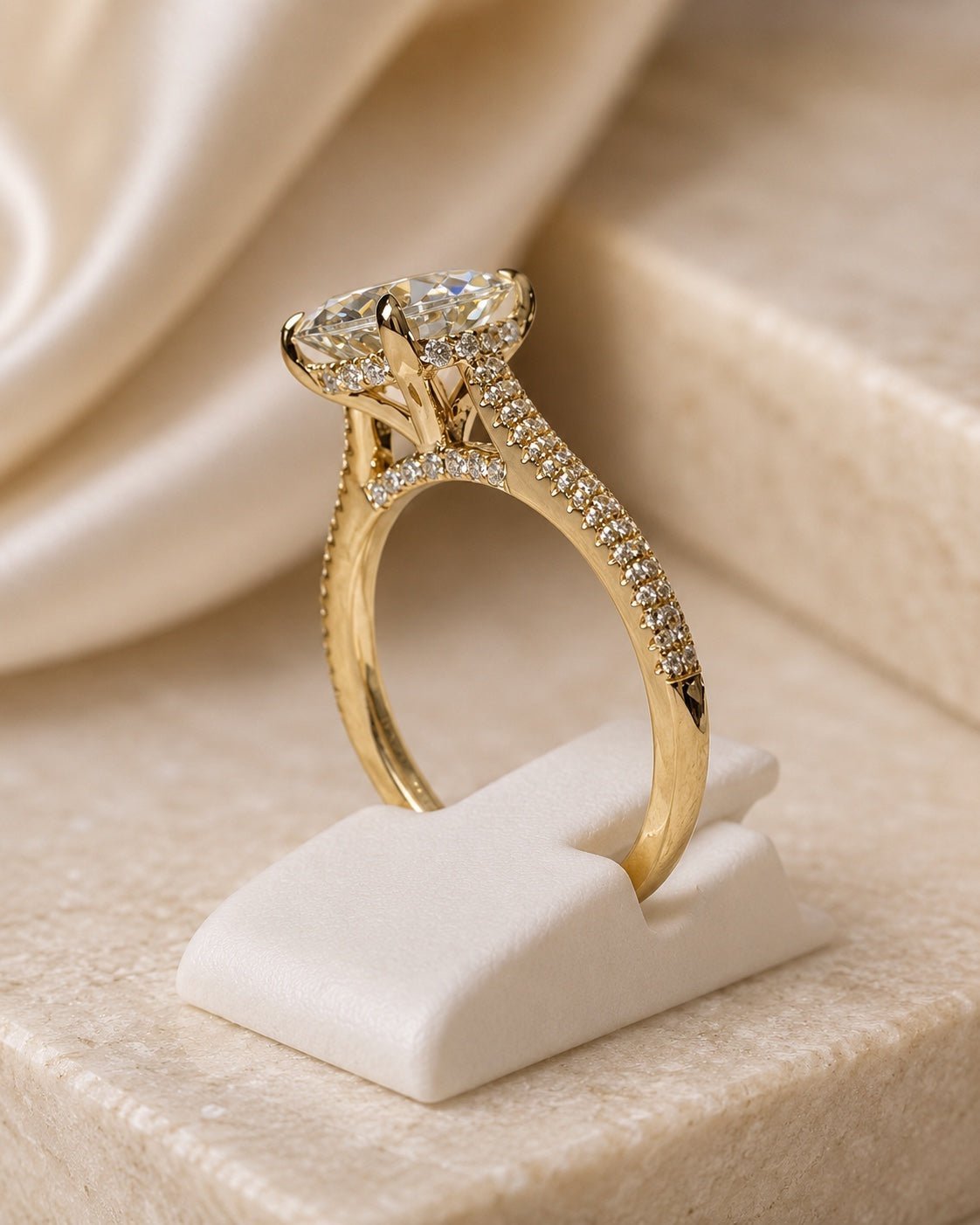
A hidden halo has small accent stones placed beneath the center stone, usually around the gallery or basket. The detail is mostly visible from the side rather than from the top.
This setting is a good choice if you want a clean face-up look with a little extra detail. See the Round Moissanite Hidden Halo Ring and read What Is a Hidden Halo Ring?.
Visible Halo Settings
A visible halo surrounds the center stone with smaller stones. It creates a larger, brighter outline from above and can make the center appear more substantial.
Halo settings have more small stones and setting points than a solitaire, so they usually require more cleaning and inspection. Compare the Round Moissanite Halo Pavé Ring, the 6ct Round Moissanite Split Shank Halo Ring, and the Cushion Cut Moissanite Halo Ring with Sapphire Accents.
Cathedral Settings
A cathedral setting has raised shoulders that rise from the band toward the center stone. This can add side support, height, and a more finished profile.
Cathedral settings are especially useful for larger center stones or rings that need more visual structure. For more detail, see What Is a Cathedral Setting?.
Bezel Settings
A bezel setting uses a rim of metal around part or all of the stone. It creates a clean, modern look and can help protect the stone edges.
Bezel settings are a strong option for active lifestyles, low-snag designs, and buyers who prefer modern quiet luxury style. For more detail, see What Is a Bezel Setting?.
Three-Stone Settings
A three-stone setting has a center stone with one side stone on each side. It creates more width across the finger and can feel more substantial than a solitaire.
This setting works well when the side stones are proportioned carefully. If the side stones are too large, they can compete with the center stone instead of supporting it. Compare the Emerald Cut Moissanite Ring with Baguette Side Stones, the 3.5 TCW Round Moissanite Channel Three-Stone Ring, and the Round Moissanite Three-Stone Pavé Ring.
Pavé Settings
A pavé setting has small stones set closely along the band. It adds sparkle without changing the center stone shape and can make a solitaire or three-stone design feel more bridal.
Pavé can be delicate, so the band should be worn thoughtfully and checked periodically. Very small stones and fine prongs require more care than a plain band. Compare the 2–3ct Round Moissanite Pavé Solitaire Ring and the 8ct Emerald Cut Moissanite Pavé Ring.
Channel-Set Settings
Channel-set accent stones sit between smooth walls of metal. This creates a cleaner and more structured line than exposed pavé, with fewer raised prongs along the band surface.
Channel settings are useful for buyers who want side sparkle with a smoother architectural appearance. Compare the 1.5ct Round Moissanite Channel-Set Engagement Ring and the 3.5 TCW Round Moissanite Channel Three-Stone Ring.
Split Shank Settings
A split shank divides the band into two or more visible lines as it approaches the center setting. The wider top profile can add support and visual movement, particularly around halos or larger center stones.
Split shanks create more presence than a plain band and may affect wedding-band fit. Review the side profile and total width before choosing this setting.
Setting Comparison
| Setting | Best For | Style Feel |
|---|---|---|
| Solitaire | Clean center-stone focus | Classic and timeless |
| Hidden halo | Subtle side sparkle | Refined and detailed |
| Visible halo | Larger face-up outline | Bright and sparkle-forward |
| Cathedral | Added support and height | Structured and elegant |
| Bezel | Protection and low-snag wear | Modern and architectural |
| Three-stone | More finger coverage | Balanced and meaningful |
| Pavé | Extra band sparkle | Delicate and bright |
| Channel set | Smoother side-stone structure | Clean and linear |
| Split shank | Width and visual support | Sculptural and substantial |
Match the Setting to the Stone Shape
Round stones work with nearly every setting. Oval stones often look beautiful in solitaire, hidden halo, and cathedral settings. Emerald cut stones pair well with clean solitaire, bezel, cathedral, baguette-accent, and three-stone settings. Cushion stones can feel soft and romantic in solitaire, halo, or pavé designs.
Pear and marquise shapes need thoughtful protection at their pointed tips. Princess and Asscher cuts need secure corner treatment. The setting should protect the stone and support the shape rather than fight against it.
Band Width and Setting Height
Band width and setting height matter more than many shoppers expect. Larger center stones usually need more support through the basket, shoulders, prongs, or band. A very thin band can look delicate but may not be appropriate for every stone size or daily-wear routine.
A higher setting can create more wedding-band clearance and a more visible side profile, but it may also snag more easily. A low setting can feel secure and compact but may leave a gap beside a straight wedding band.
Consider Daily Wear
If the ring will be worn every day, setting durability matters. A beautiful ring should also be realistic for the way it will be used.
- Choose secure prongs for larger stones.
- Consider cathedral support for taller or larger settings.
- Choose bezel settings for smoother protection.
- Be mindful with very thin bands and pavé details.
- Remove the ring during heavy lifting, workouts, gardening, swimming, and harsh chemical use.
- Plan wedding band fit before finalizing the design.
Common Setting Mistakes
- Choosing only from a top-view photo.
- Ignoring the side profile and gallery.
- Choosing a band that is too thin for a large stone.
- Adding too many details until the ring feels busy.
- Forgetting to plan how a wedding band will sit beside it.
- Assuming an open or split design is automatically adjustable.
- Choosing a low-profile setting without confirming band clearance.
Which Setting Should You Choose?
Choose the setting that balances your style with the practical needs of the ring. A refined moissanite engagement ring does not need every design detail at once. Often, the strongest ring is the one with clear priorities and well-balanced proportions.
Frequently Asked Questions
What is the most classic moissanite engagement ring setting?
A solitaire setting is usually the most classic because it keeps the design clean and centered on the stone.
What setting is best for a large moissanite?
Larger moissanite stones often benefit from secure prongs, a supportive basket, cathedral shoulders, or a bezel design depending on the style.
Is a hidden halo better than a solitaire?
A hidden halo is better if you want subtle side detail. A solitaire is better if you want the cleanest possible design and fewer small stones to maintain.
What is the difference between pavé and channel set?
Pavé stones are held by small beads or prongs and create a delicate surface of sparkle. Channel-set stones sit between metal walls for a smoother, more structured appearance.
Is a bezel setting good for engagement rings?
Yes. A bezel can be a strong engagement ring choice for buyers who want a protective, modern, low-snag setting.
Can any setting fit a wedding band?
No. Wedding band fit depends on the basket, gallery, setting height, halo, side details, and overall ring design.